


Where Dreams and Memories Intersect: Taisuke Kinugasa's Magical Uniqueness. "Listening Museum #7" ~Part 2~
Part one is here
#Meeting my teacher
Ogawa: I understand that many of your works are inspired by places you've traveled to. Do you travel a lot with your family?
Tamami: Yes, we do. We've traveled all over Japan, from Okinawa to Hokkaido, and I've even had exhibitions overseas in places like New York and Hungary. When we travel, Taisuke also enjoys sightseeing and visiting galleries, but on the way home, he always buys a book about that city.
Ogawa: Oh really? What kind of books are they?
Tamami: Photo books. He buys photo books of cityscapes. At first, I didn't understand why he bought them, and I wondered what he would do with them. But when we got home, he would look at the book, extract only the scenes he liked, collage them together like a dreamland, and then carefully hold the book and start drawing. He draws the scenery he wishes existed, so it's not an exact depiction of the actual scenery. But I think that book serves as an anchor, helping him recall things like, "I ate this," or "Mom and Dad were drinking wine from noon."
Ogawa: So, through the paintings, we can see memories of the time spent there.
Tamami: That's right. So, I think historical European cities or New York appear to Taisuke like theme parks. He simply wants to paint them himself.
Takaya: At Heralbony, we once had him create a piece based on Namie Town in Fukushima Prefecture. It's now displayed as a large mural in Namie Town. Even though we didn't specifically ask him to, the word "Ganbare" (do your best) was included in the artwork. So, I think Taisuke is the type who "gets it." I'm sure he understands what's going on right now and is listening.
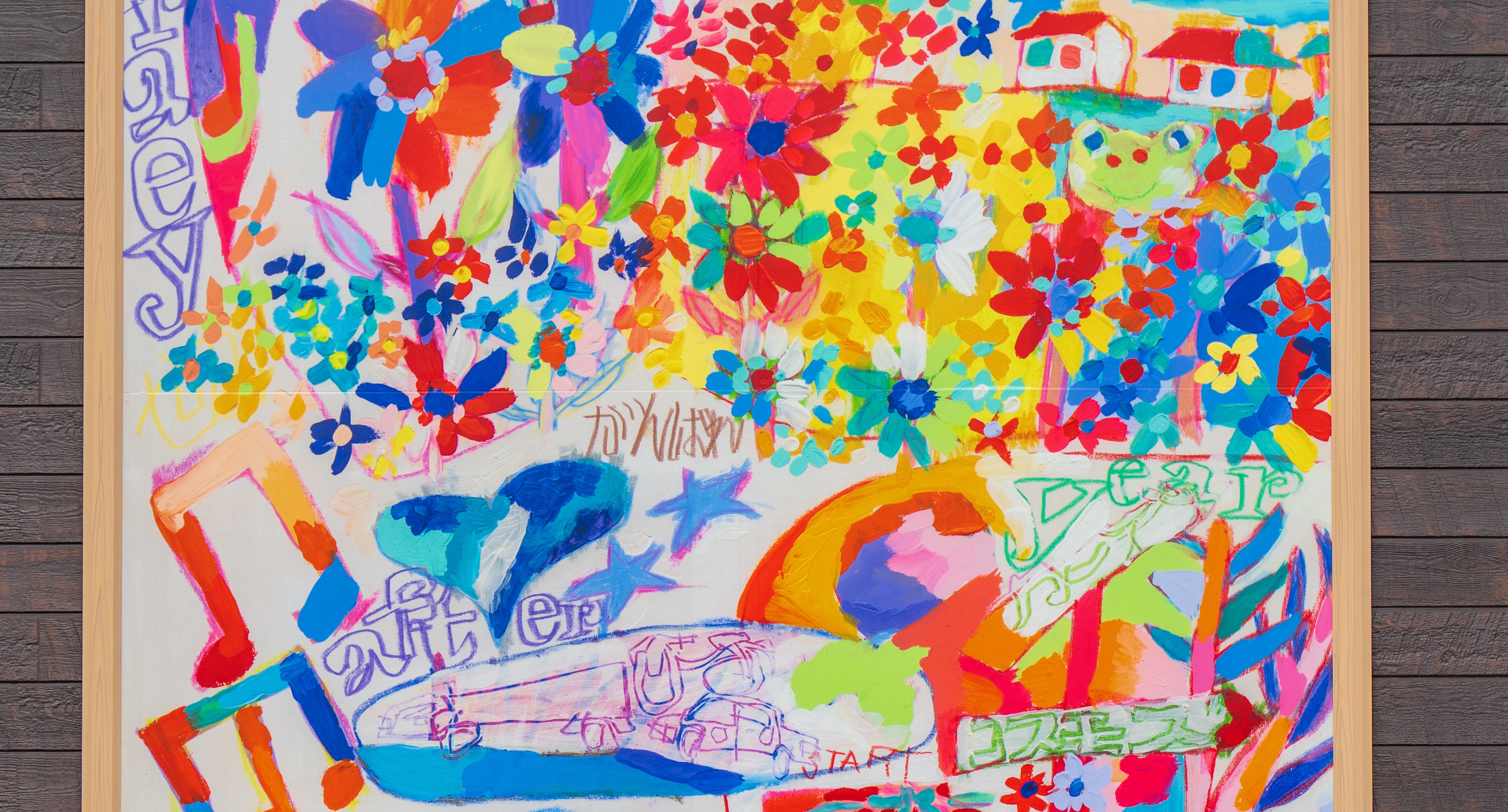
Art displayed at the "Namie Art Project: Memories of Namie, Future of Namie." The word "Ganbare" (Go for it!) is in the center.
Tamami: Taisuke understood everything. I had never been to Namie Town either, so I briefly explained, "There was a Cosmos Marathon there, you know." Then he pasted photos on the wall and started drawing right away. I didn't say anything like that, but he wrote "Ganbare" in big letters. It gave me a bit of a start.
Taisuke: (Continues to mumble something)
(Taisuke suddenly stands up and leaves the recording room)
Takaya: He left to use the restroom. That's good. I want to run a radio show that's that accommodating (laughs).
Ogawa: While Taisuke is out, I'd like to ask you, his mother, if there are any memorable moments from your time with Taisuke so far?
Tamami: Every day is a repeat of days where the "story that would probably unfold" is overturned! I've had many happy moments, and also a lot of terrible experiences.
Takaya: My mother also seemed quite desperate when my older brother was born. She even had a book on the bookshelf titled 'I Can't Die and Leave This Child Behind.'
Tamami: When mothers (with children with disabilities) gather and talk, that's often the first topic. "Let's live long, shall we?" (laughs)
Takaya: In the welfare industry, it's called the "issue of what happens after parents pass away." How sons and daughters with severe intellectual disabilities will live after their parents die is a challenge for the country, and HerAlbony also hopes to contribute in that area.
Tamami: Just recently, Taisuke was fortunate enough to meet an understanding teacher at the swimming school you talked about in your podcast, Takaya. Now he swims 1km every day.
Ogawa: That's amazing! I can't swim 1km.
Tamami: He's often blessed with good people. Now, every morning, he takes about a 10,000-step walk with his father. That includes running.
Takaya: That's incredibly healthy!
Tamami: And he paints, you know. In the evening, he goes to the pool and swims 1km. That's his life.
Ogawa: He's incredibly energetic.
Takaya: But those routines are really important. My brother has to eat soba on Saturdays, and tonkotsu ramen on a specific day, at a specific restaurant. My mother always has to accompany him, so she's put on a little weight.
Tamami: It's decided by the day of the week. For us, it's karaage.
Takaya: Karaage, huh. It's like being a lifelong manager.
Tamami: For us, back in the VHS era, it was decided that "this video will be watched at this time on Monday." Since it was a video, he could watch it anytime, but he had to watch that video at that specific time. These things are really difficult to get people to understand if they don't have someone like that in their family.
Ogawa: By the way, was Taisuke's condition discovered after he was born?
Tamami: He just didn't speak much, or rather, conversations couldn't be formed. While I kept thinking, "Something's wrong, something's wrong," we happened to have an older child who was only a year older, so I thought, "This difference in developmental progress is too great," and we went to the child guidance center for a diagnosis.
Ogawa: I see.
Tamami: It starts with "potential possibility," and some people improve, but some people's conditions are confirmed. We had a wonderful encounter with a teacher there. They really saved our lives.
Ogawa: How did they help you?
Tamami: As a parent, you can't help but feel pessimistic. He couldn't do the things other kids could do at kindergarten. At sports days, he'd run in the wrong direction or run away, repeatedly. The teacher then said, "Instead of forcing him to do things, let's help those around him understand." She said, "Taisuke has his unique characteristics, but he can read and draw, so let's use pictures and words to tell him things like, 'Tomorrow is sports day, everyone will run here when it starts.' Let's also help the school teachers understand." She actually went to the school to explain things for us.
Ogawa: The doctor did!
Takaya: What a wonderful teacher.
Tamami: There's a support program for people with autism called the TEACCH program (Treatment and Education of Autistic and Related Communication Handicapped Children). In it, for example, you show a picture card of someone brushing their teeth and have them repeat "brush teeth" to learn words. Since Taisuke loved drawing, the teacher suggested, "Let's have Taisuke draw things himself, like sleeping or brushing teeth. That way, he can learn words himself." She was full of innovative ideas.
Takaya: So, drawings turn into words. Usually, words come first.
Tamami: She'd say, "Let's make today a drawing day." So we'd go to the clinic, he'd draw, and the teacher would laminate them and make wonderful cards. When I asked him, "What are we doing today?" he'd put down the card that said "play with toy cars."
Takaya: The TEACCH program is a very famous program related to autism.
Tamami: It really helps, doesn't it?
Takaya: Our family also used the "structuring the environment" concept from the TEACCH program. We communicated using picture cards and so on.
Tamami: That's right. That teacher visited our home and would notice things like, "It's good that you write names on chopsticks," or "It's very clear if you number the drawers."
Takaya: She's truly an amazing teacher. Our family also put up signs like "Don't force the doorknob closed." He would bash the doors with unbelievable force. We really structured everything.
Ogawa: Oh, Taisuke is back!
Takaya: Welcome back!
Ogawa: Is the TEACCH program something that is officially established in the medical field?
Tamami: It's a program to promote communication for people with autism.
Takaya: Many doctors go to America to study it.
Tamami: It originated overseas, and that teacher was quick to implement it in Kyoto. That helped us a lot, and it also allowed the school teachers to communicate with Taisuke by showing him pamphlets, saying things like, "Tomorrow is the field trip."
Ogawa: By the way, was the school a public school?
Tamami: He attended local public elementary and junior high schools until junior high. We had an older daughter who was one year older, and for us, they were both our children, so we wanted to raise them in the same environment as much as possible. This was about 25 years ago, so there was still an atmosphere where children with developmental disabilities had to go to a separate class, but when we explained our ideas, they were very empathetic and said, "Then let's have him live together in the classroom." They said, "We think it will have a good outcome for the other children as well." Since he couldn't follow the blackboard lessons, I prepared teaching materials specifically for Taisuke, such as drawing endlessly or simple addition and subtraction exercises.
Ogawa: I see. So, in terms of education, Tamami also assisted Taisuke.
(Taisuke returns to Takaya's side)
Tamami: That's right. To be in the classroom, if Taisuke was wandering around, it would be difficult for the teacher, but he could get absorbed in drawing. So, I would prepare a stack of worksheets, put them in his bag, and when he finished, they would mark them.
Takaya: Taisuke just tapped me on the shoulder. I'm so happy!
Tamami: Their friendship is amazing!
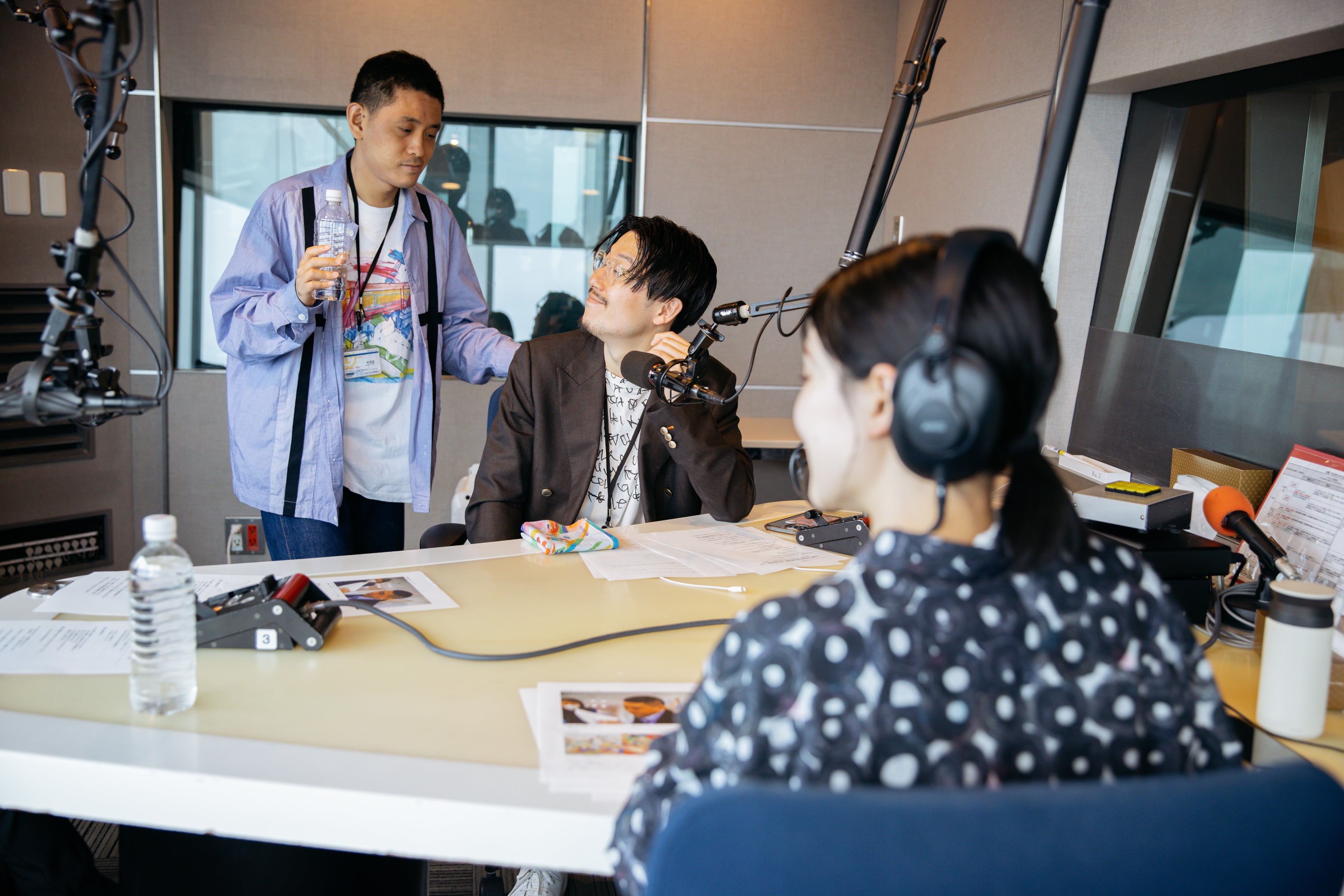
#TheSunOfBudapest
Ogawa: Since Taisuke is back, I'd like to ask him something. Are there any places from your past travels that particularly stand out in your memory?
Takaya: Which place did you enjoy the most, Taisuke?
Tamami: New York? Budapest?
Taisuke: New York... Bu-da-pest!
Takaya: Budapest, huh!
Tamami: Your favorite?
Taisuke: My ab-so-lute favorite, Buda-pest!
Takaya: Your absolute favorite, Budapest! Nice!
Ogawa: I'd love to go there!
Tamami: It's truly wonderful. The entire city is a World Heritage site, and people live in apartment buildings that are hundreds of years old. Life goes on as usual there, and there are still cobblestone streets.

Taisuke Kinugasa "Breakfast in Budapest"
Sugaya: This is exactly the piece called "Breakfast in Budapest."
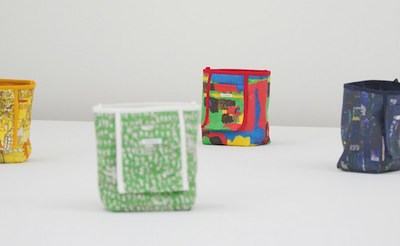
Ogawa: What a wonderful title! It's a piece that has been made into a handkerchief.
Tamami: This is the famous town hall.
Ogawa: Oh, wow. The buildings in the town are lovely, and the colors of the sky and sun in the background are also very beautiful.
Tamami: The color of the sun changes depending on the city you visit. In Budapest, the sun left a strong impression. It happened to be a season when it was bright from about 4 AM to 9 AM, so the sun must have been very impressive.
Ogawa: But, memories from such trips tend to fade over time, don't they? So, Taisuke still remembers them, right?
Tamami: You know, they don't fade. About 10 years ago when we went to Budapest, two or three days before that, we had been to Angkor Wat in Cambodia. It was a truly wonderful place, and after we returned to Japan, Taisuke drew it several times. Then, just two or three days ago, I wanted him to draw something again, so I showed him photos from that time without saying anything specific, and he started drawing. All of a sudden, he said "Angkor Thom." In fact, there's another ruin called Angkor Thom, separate from Angkor Wat, and he was drawing that. But I had completely forgotten that I had even been to Angkor Thom. So, Taisuke remembers it clearly.
Ogawa: He remembers the names of places and what he did there, doesn't he? How is his drawing speed?
Sugaya: Amazing.
Tamami: It's been over 10 years since we went to Angkor Wat. When he drew it right after the trip, he looked at photos and drew a picture that extracted only the parts of the landscape he liked. But this time's drawing included elements like the area with lovely cafes in Cambodia, or the tuk-tuks, which are like bicycle taxis, rushing around, and amidst all the bustling people, an elephant walking. I was surprised that all these elements from our trip to Cambodia were included in one single painting.
Sugaya: Recalling Angkor Wat, Taisuke-san is smiling too, isn't he? Do you want to go to Angkor Wat again?
Tamami: We do, don't we?
Ogawa: Are there any countries you'd like to visit in the future?
Tamami: (To Taisuke) Where do you want to go next? Where was it you wanted to go now? The place in the guidebook.
Taisuke: Kadoku, Kango
Tamami: He's currently into domestic travel in Japan. Where do you want to go now?
Taisuke: Ka, goshima
Tamami: You're going to Kagoshima, aren't you? And after that?
Taisuke: Tane, ga, shima
Tamami: That's right, Tanegashima. He loves pictures of rockets, so I thought, what if I show him the space center?
Sugaya: That sounds exciting!
Ogawa: I really want to see the Tanegashima that Taisuke-san draws!
Tamami: He always walks around with guidebooks, so the next place he wants to go is in his heavy bag.
I put it in.
(Here, Taisuke stands up)
Ogawa: He's always thinking about where he wants to go. You can actually see Taisuke's works, can't you?
Sugaya: That's right! Exactly as Taisuke-san stood up, let me announce that at the "ART IN YOU: Art is within you"※ exhibition, Taisuke Kinugasa's works "Spring Journey" and "Osaka Night Cruise" are truly wonderful pieces on display, so please do come and see them.
※The exhibition has ended.
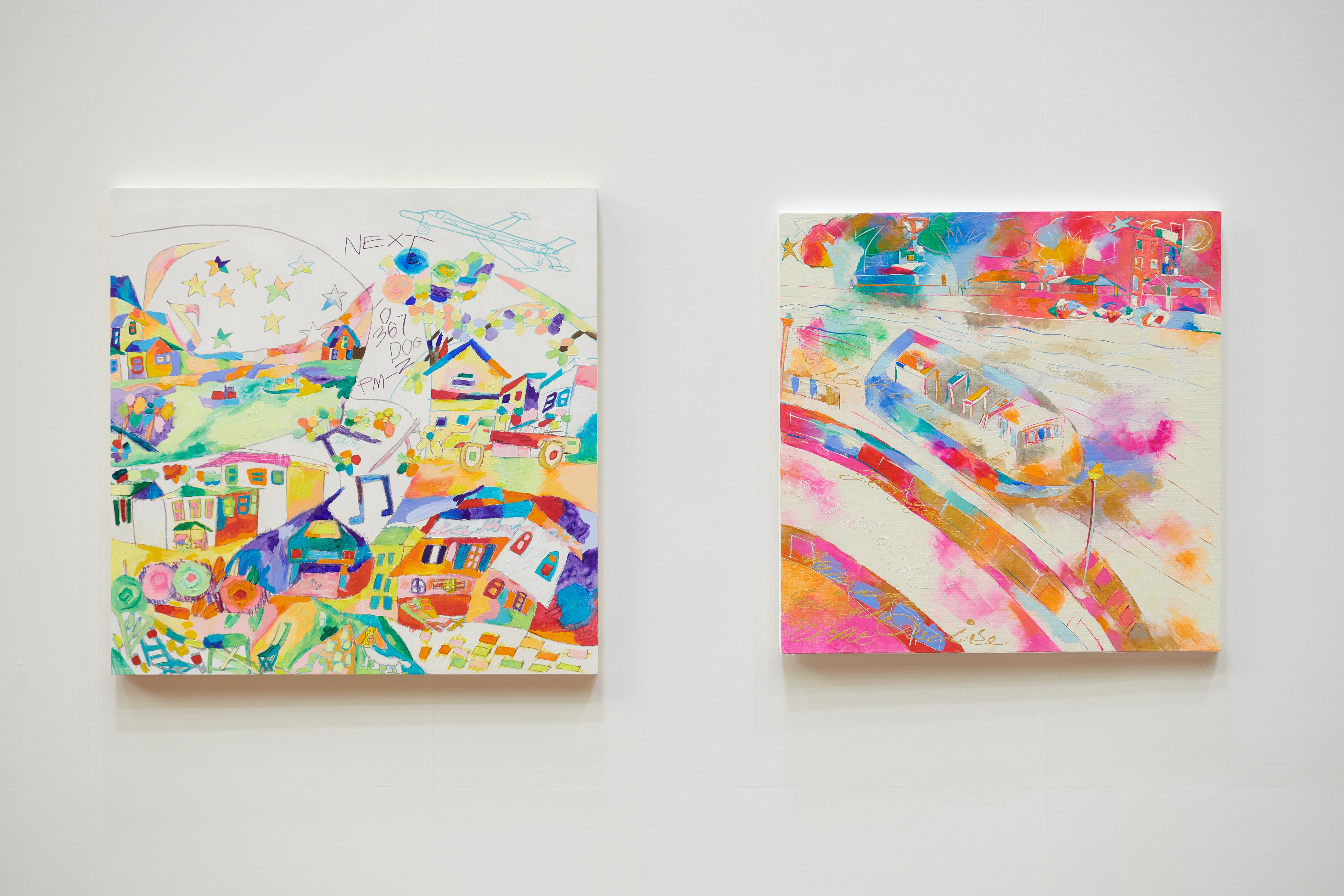
(Left) "Spring Journey," (Right) "Osaka Night Cruise"
Ogawa: Both are wonderful works. How big are the original paintings?
Tamami: Let's see, about 70 centimeters square.
Takaya: They're big, aren't they? I really want to see those in person.
Tamami: "Spring Journey" combines European landscapes that I mentioned earlier, and scenery that I like, to create something like a dreamland. There are musical notes, flowers, stars, airplanes flying, and even words written in it.
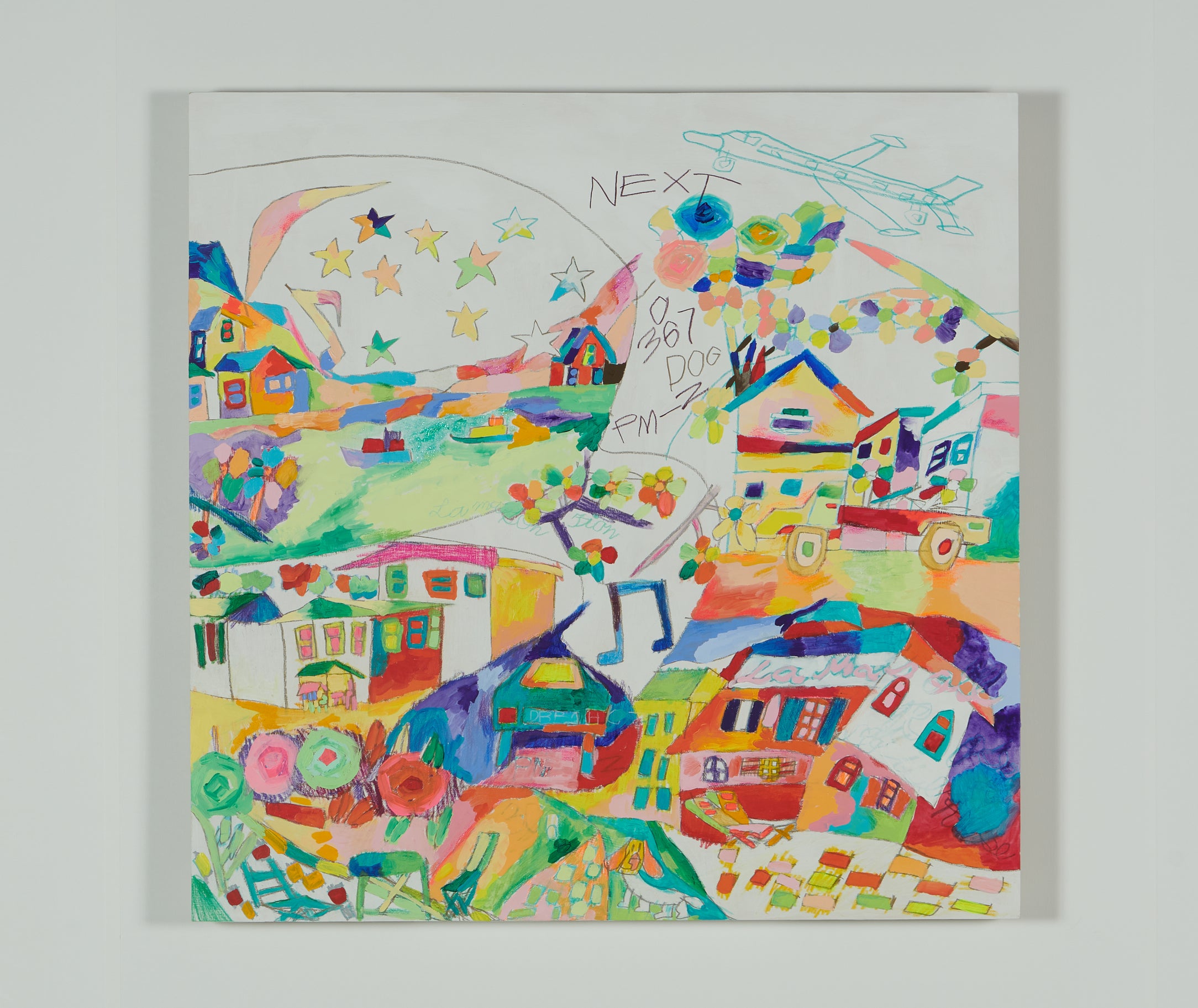
Taisuke Kinugasa "Spring Journey"
Tamami: It says "NEXT" in the text. I was a little surprised. "Tai-kun is so cool."
(Taisuke is leaning close to Takaya.)
Takaya: Taisuke is also leaning on my shoulder. Thank you very much. Oh, you're looking over my shoulder (laughs). Okay, high five.
(The two high-five.)
Ogawa: They high-fived. So, Taisuke and your mother, Tamami, thank you so much for your valuable stories today.
Taisuke: Tha-nk you ve-ry much.
Takaya: Nice.
text Chise Akasaka / photo Mika Hashimoto
Taisuke Kinugasa
For me, to live is to paint. I capture the landscapes I encounter while traveling the world with my family, expressing them through my unique worldview, vibrant with light and color. Possessing a sense of color and sensibility often described as magical, I swiftly select from hundreds of paints to create my works. My artwork has garnered high praise both domestically and internationally, with large-scale ema (votive tablets) dedicated at Kamigoryo Shrine and Shirakumo Shrine within the Kyoto Imperial Palace grounds.

Podcast "HERALBONY TONE FROM MUSEUM ~The Listening Museum~" now available for free streaming.
This program, based on the concept of "The History of Unique Artists Imagined from Art," listens to the art and delves into the personality and life journey of a "unique artist" seen through their works.
The show is hosted by Sara Ogawa, an actress, filmmaker, and writer, and Takaya Matsuda, CEO of Heralbony. Each episode features one Heralbony contracted artist, welcoming artists with intellectual disabilities, their families, and staff from welfare facilities as guests.
It is distributed every Sunday on Apple Podcast, Google Podcast, Spotify, and Amazon Music.
You can also enjoy back issues for free.