Table of Contents
FY25 Targets
Division Strategy Change:
Mid-Term Goal Reassessment
FY25 Reset Targets
Quantitative results relative to goals
Qualitative review for this period
Symbolic initiatives for this term
Responsible manufacturing Practical Report vol.1
Responsible Production
Report vol.1
Table of Contents
HERALBONY's Declaration of Responsible Manufacturing was announced during the rebranding in June 2024, coinciding with the logo change.
This declaration was born from the desire that Heralbony, in its growth over the next 10 or 20 years, will not contribute to creating negative environments in the manufacturing of its own products.
For Heralbony, products are not merely fashion items, but rather vehicles for delivering ideas and messages to society. We do not want to impose burdens on manufacturers or the natural environment during the manufacturing process. We want to avoid making choices that might unknowingly harm others as much as possible. These are our intentions.
This past year was the starting point for us to challenge ourselves on the ground with the policies and goals outlined in the declaration.
In this report, we will look back on the progress made over the past year and report on how we took action and what we learned regarding our stated policy of "responsible manufacturing."
FY25 Targets
Providing products with the quality to accompany you for a long time
Achieving optimal production through balanced relationships
At least 60% of all products have undergone a factory tour during one or more stages of the production process.
We aim to ensure traceability of 80% for final manufacturing, 50% for processing, and 30% for raw materials.
Use of materials with low environmental impact
exceeding 50%
Mid-Year Goal Review Due to Business Unit Strategy Change
FY25 Recalibrated Targets
- 1. 20% of the main materials for all products are on the in-house selection criteria list.
- 2. Of all product manufacturers, we will visit three (one visit every two months) in the second half of FY25.
- 3. We will ensure traceability for 50% of finished products, 30% of processed materials, and 20% of raw fabrics across the manufacturing process of all products.
Knowing the fabric means knowing the factory that carried out processes such as weaving to turn raw materials into fabric.
Priority 1
Priority 2


Quantitative results
against targets
20% of the main materials for all products meet our in-house selection criteria list.

16.18% / 100% (68 items total)
On the other hand, our relationships with manufacturers have deepened. We are increasingly being introduced to fabrics that are scheduled to obtain certifications to meet our in-house plans, and manufacturers are sharing more information about their fabric production sites.
Moving forward, we will secure sufficient lead time for planning and production, expanding the time allocated for material selection and fabric production to increase our options. We also plan to implement a process for updating our standard products with fabrics that meet our selection criteria.
Among all product manufacturers, we will visit three in the second half of the fiscal year (once every two months).

Seeing the manufacturing sites directly and learning about the people who create our products deepened our feelings toward the products and boosted our confidence when delivering them to our customers. Furthermore, building trust with the factories contributes to improving product quality.
Next fiscal year, we plan to establish and implement a regular visiting schedule from the beginning of the period. Through continuous repeat visits, we aim to deepen dialogue with the manufacturing sites and foster a strong relationship.
We will ensure traceability for 50% of final manufacturing, 30% of processing, and 20% of fabric across all product manufacturing processes.

20.59% / 100% (68 items total)
On the other hand, it's not easy to understand the background of the "base" fabrics used for printing artwork, as creating custom fabrics is often difficult due to cost and time constraints, leading us to frequently use stock fabrics from manufacturers.
Moving forward, we will continue to deepen our collaboration with manufacturers and engage in careful communication to visualize background information. Currently, due to small manufacturing lots per item, it is difficult to produce original fabrics for each item. However, we aim to build relationships with fabric manufacturers and create a system and environment that better ensures the traceability of the materials we use.

63.24% / 100% (68 total items)

94.12% / 100% (68 items total)
Qualitative
Review for this Period
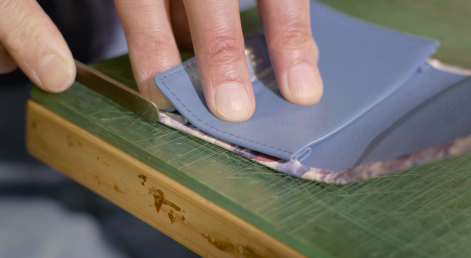
Symbolic initiatives
for this term